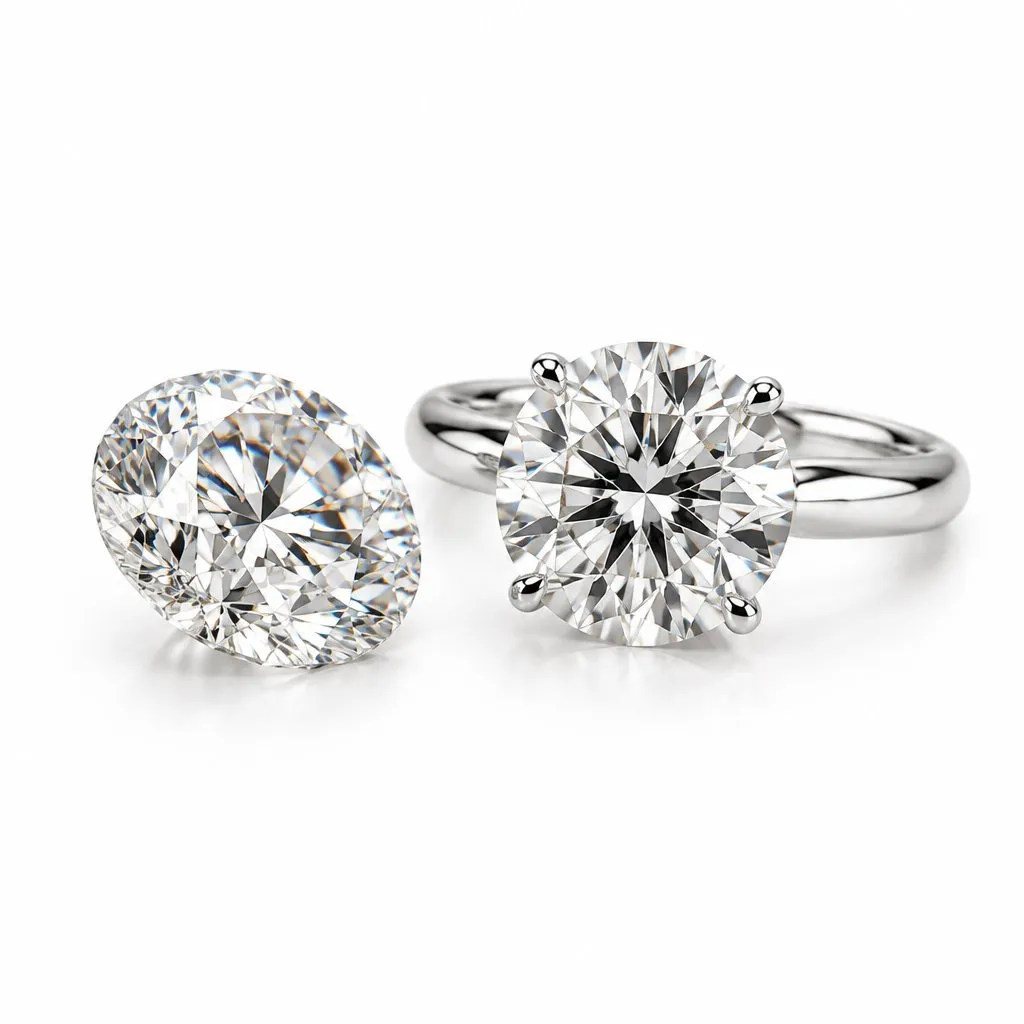
Loose and mounted natural diamonds of 1.00 carat and larger, tested for origin and graded in front of you.
Bring your stone or jewelry to any GoldMax location for a free, in-person evaluation.
Why 1 carat and up
We buy loose and mounted natural diamonds of 1.00 carat and larger. Below one carat, per-carat pricing drops sharply and the cost of grading, testing, and reselling individual stones outweighs what we can responsibly pay you.
If your stones are under a carat, still bring the piece in. We buy the gold or platinum by weight, and smaller accent stones are evaluated as a lot. You're not walking away with nothing.
What Actually Determines Your Offer
Certification
The report matters, and not all reports are equal. GIA is the most widely recognized grading lab, and GIA-graded stones generally hold resale value best. Labs don't all grade to the same standard, so a stone graded by another lab may grade lower when measured against GIA standards. Knowing that before you come in saves a lot of surprise at the counter.
Cut, Color, Clarity, Carat
In that order of impact on what we can pay. A poorly cut 1.5 ct stone can bring less than a well-cut 1.2 ct. Fluorescence, girdle thickness, and culet size also factor in. We show you the grading, not just the number.
Mounted vs. Loose
Mounted stones can be evaluated in the setting, but a stone that has to be removed to grade accurately will be quoted with that in mind.
Natural vs. lab-grown
Lab-grown diamond prices have fallen sharply in recent years, and lab-grown stones have very little resale market. Natural diamonds trade against an established industry price list that buyers, sellers, and appraisers all reference. Lab-grown has no equivalent benchmark.
We test every stone for origin before quoting. If yours is lab-grown, we'll tell you and show you why. It may not be the answer you wanted, but you'll get it from us in five minutes instead of after driving to four stores.
Every major shape
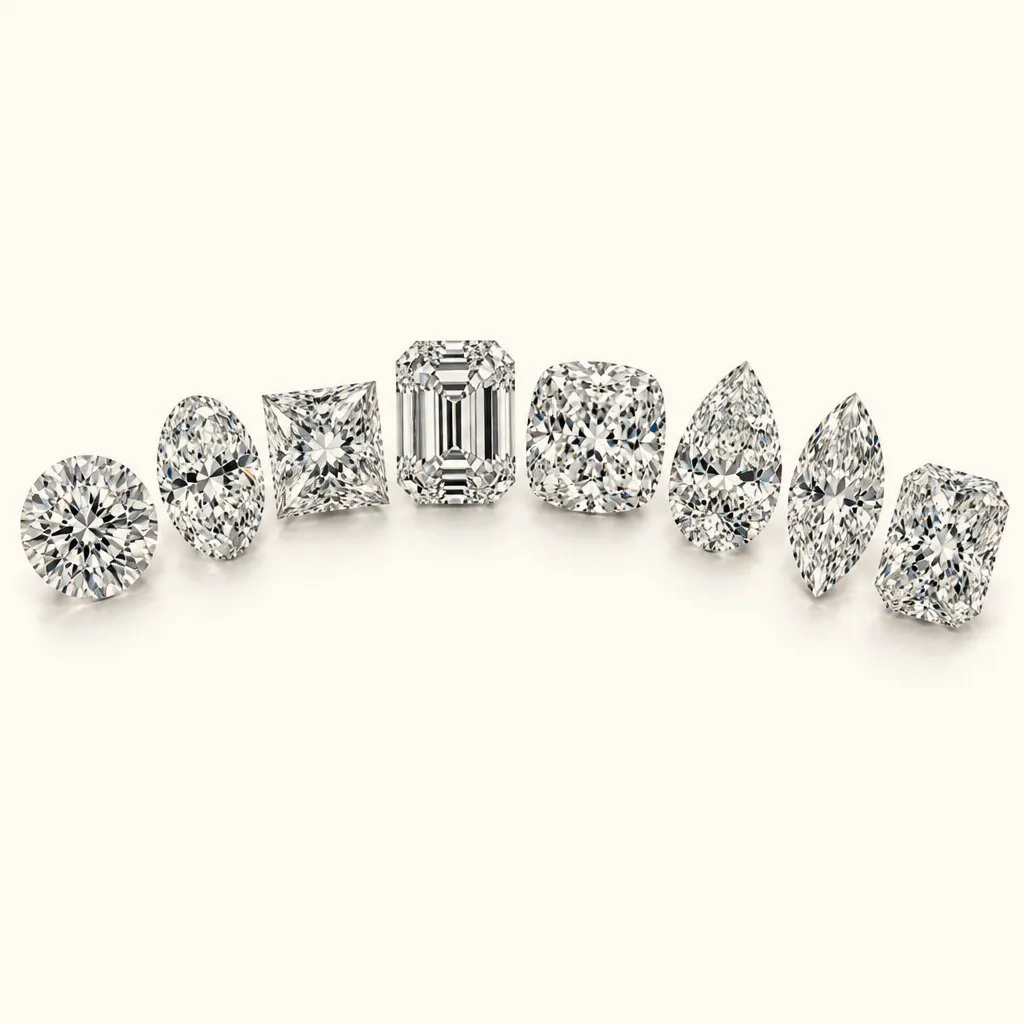
Shape affects demand, pricing, and which grading details matter most. Here is what we look at on each.
Round Brilliant
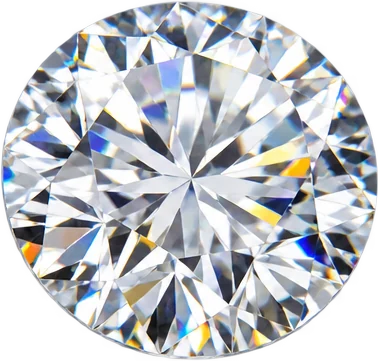
The benchmark and the most liquid shape on the market. Round brilliants are the only shape GIA assigns an official cut grade to, which is part of why they carry a pricing premium over fancy shapes of the same color and clarity.
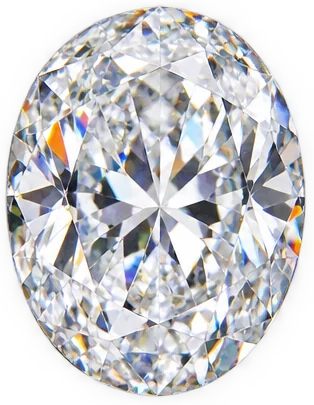
Oval
One of the fastest-growing shapes in recent years. Ovals face up larger than a round of the same carat weight. We check length-to-width ratio and bowtie, both of which move the number.
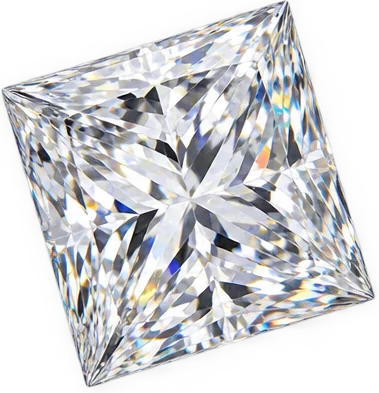
Princess
Square brilliant cut. Past its peak popularity, which affects current resale. Still readily bought, just priced to today's market.
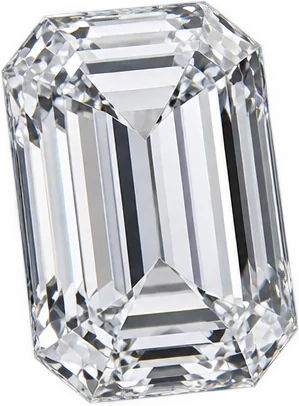
Emerald
Step cut with long, open facets that show every inclusion, so clarity carries more weight here than in brilliant cuts.
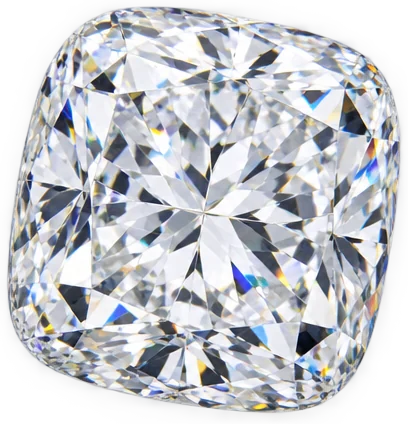
Cushion
Soft square with rounded corners and strong vintage appeal. Antique cushions and modern cushion brilliants price differently.
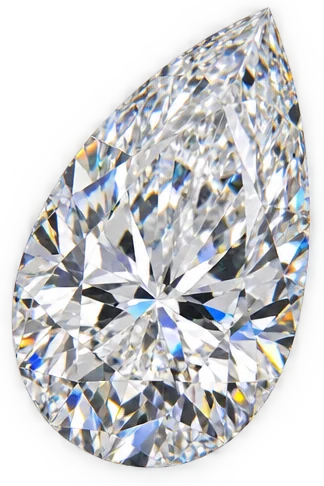
Pear
Elongated teardrop with rising demand. Point condition matters, since chips at the tip are common and affect value.
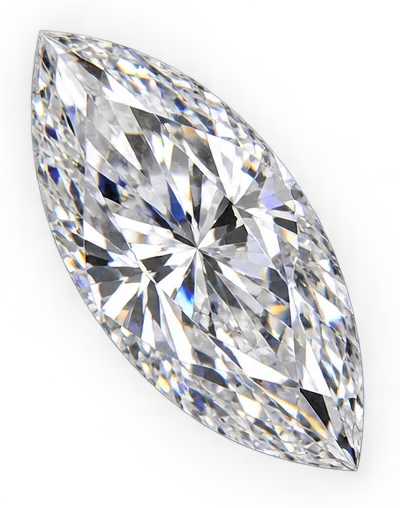
Marquise
Elongated with points at both ends. Maximum face-up size per carat, with a smaller buyer pool than rounds or ovals.
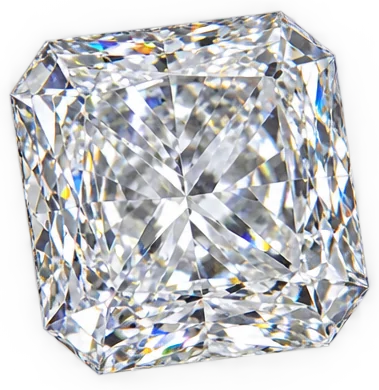
Radiant
Rectangular or square with brilliant faceting and trimmed corners, bridging emerald geometry and round brilliance.
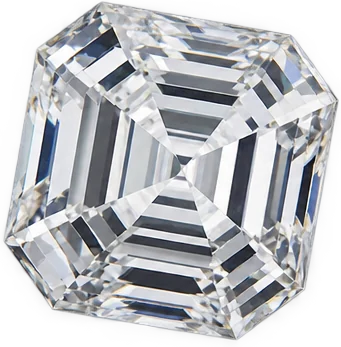
Asscher
Square step cut with the distinctive windmill pattern. Art Deco appeal and, like emerald, it demands high clarity.
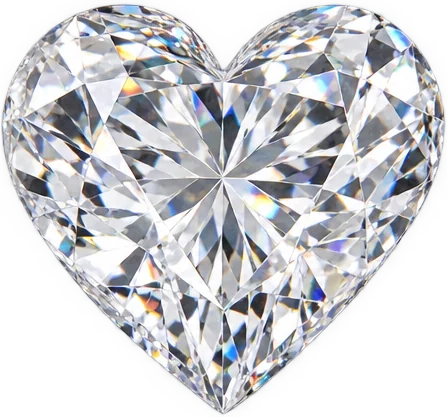
Heart
Symmetry is everything, and hearts generally need to be 0.50 ct or larger for the shape to read properly.
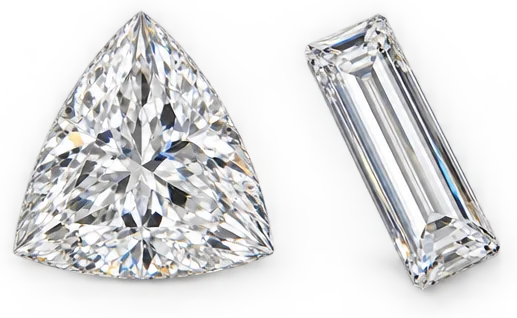
Trillion & Baguette
Typically side stones. Bought as accent lots rather than individually.
How We Determine Value
Every collection is different, which is why an accurate offer requires an individual evaluation. Depending on the item, our buyers may consider the following:
We walk you through the relevant factors so you can understand exactly how your offer was determined.
What We Buy
Visit one of our Central Florida locations for a professional, in-person evaluation from experienced buyers who make selling simple, transparent, and pressure-free.
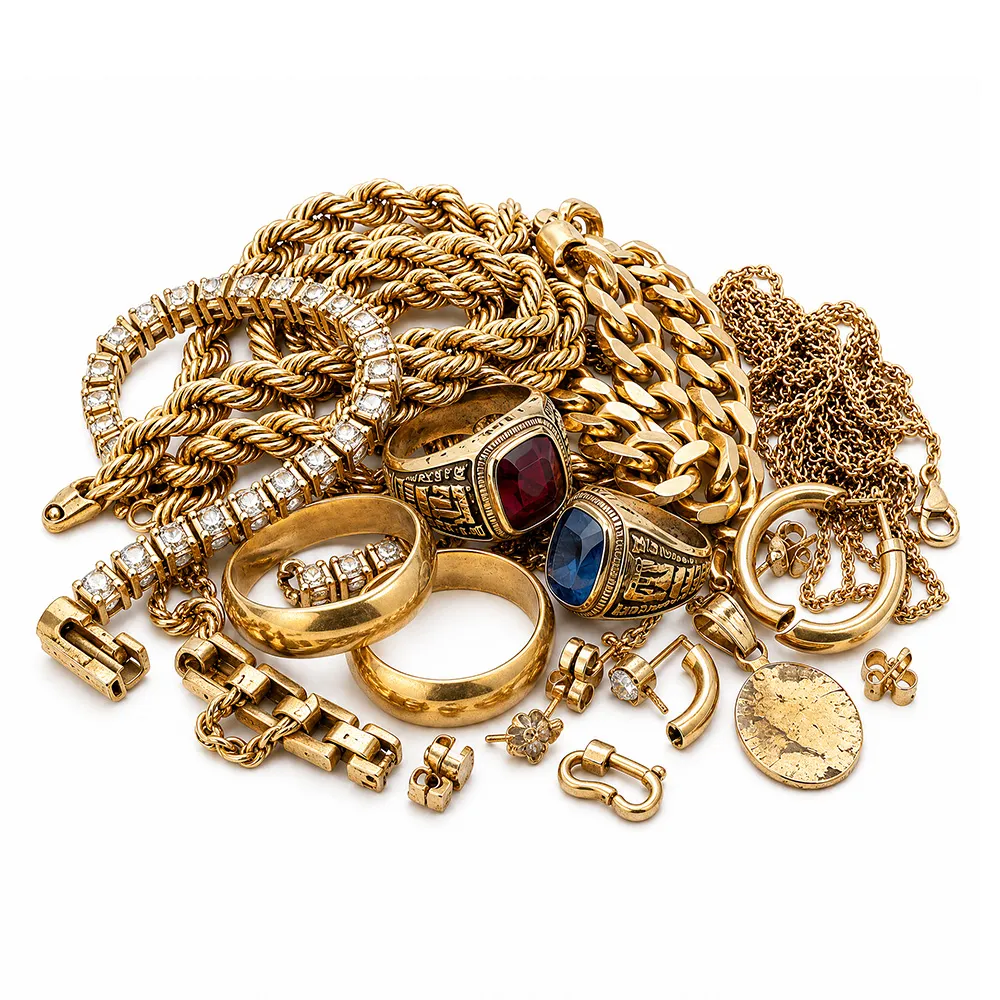
Gold Jewelry
Chains, rings, bracelets, earrings, and broken or unwanted gold pieces, evaluated by karat, weight, and current market value.
Learn More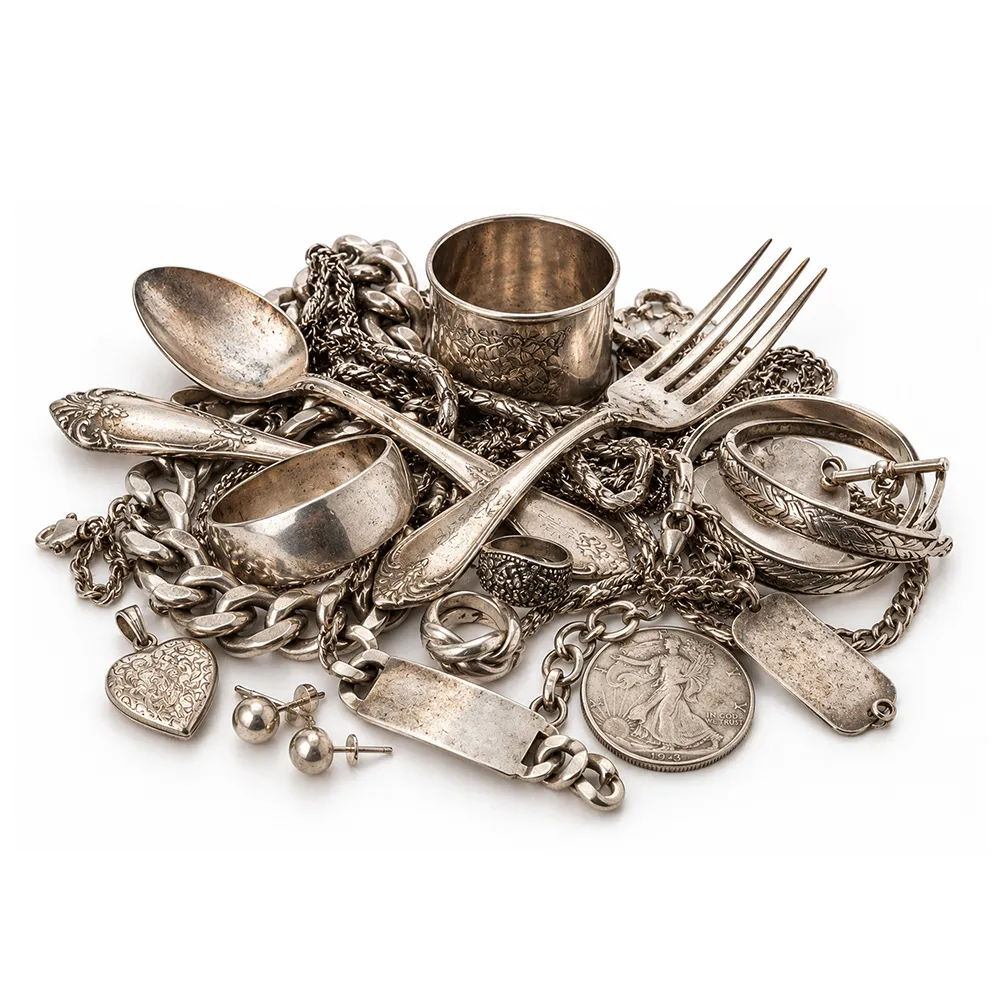
Sterling Silverware & Jewelry
Sterling silver jewelry, flatware, tea sets, and other silver pieces in a range of styles, ages, and conditions.
Learn More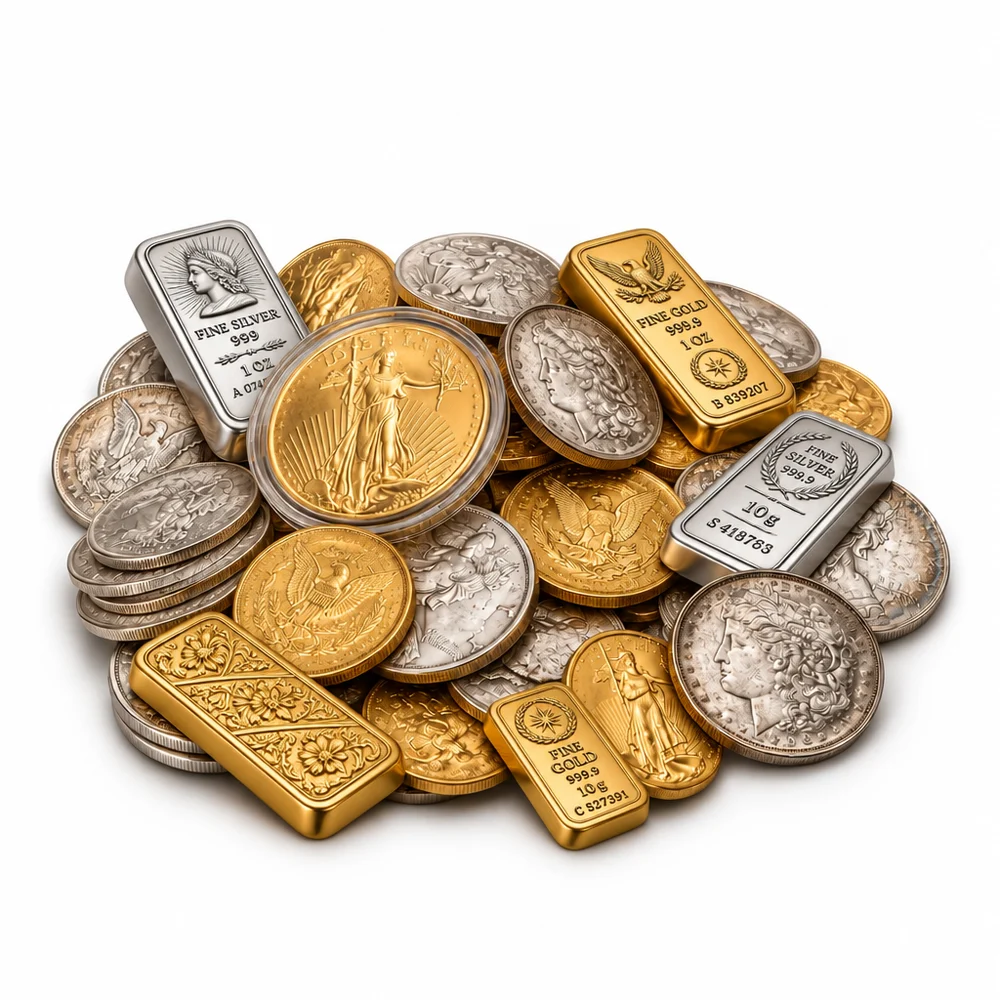
Coins & Bars
Gold and silver coins, bullion bars, and rare or collectible coins, evaluated for metal content, rarity, and condition.
Learn More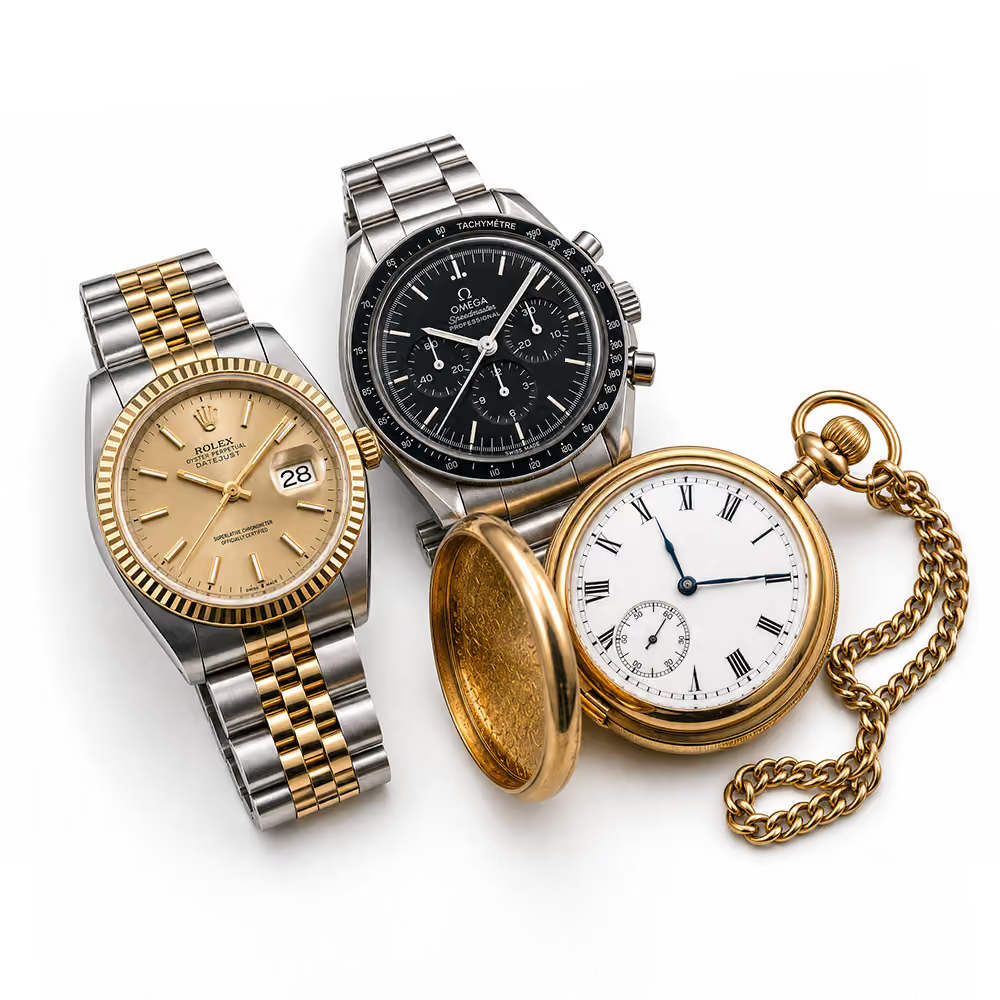
Watches
Rolex, pocket watches, and other high-end timepieces, including vintage, modern, working, or damaged pieces.
Learn More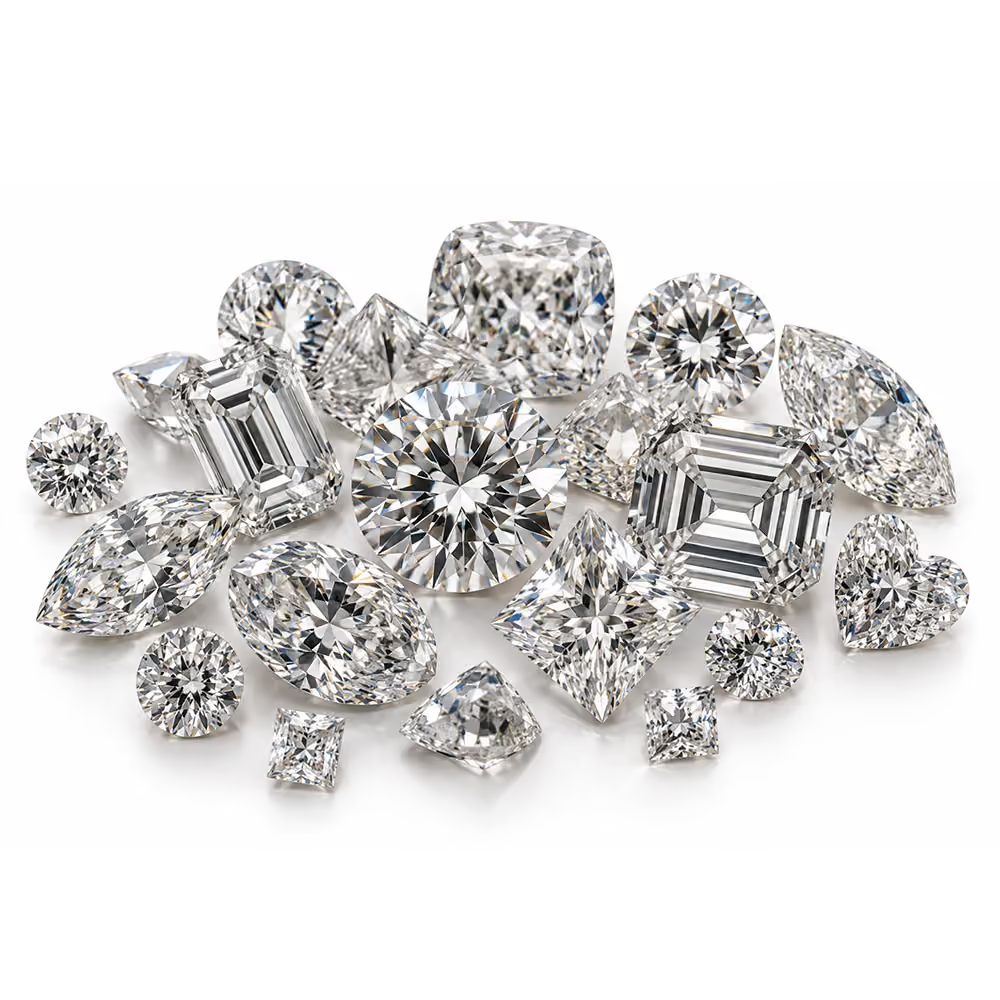
Diamonds
Natural diamonds of 1 carat and larger, loose or mounted, tested for origin and graded in front of you.
Learn More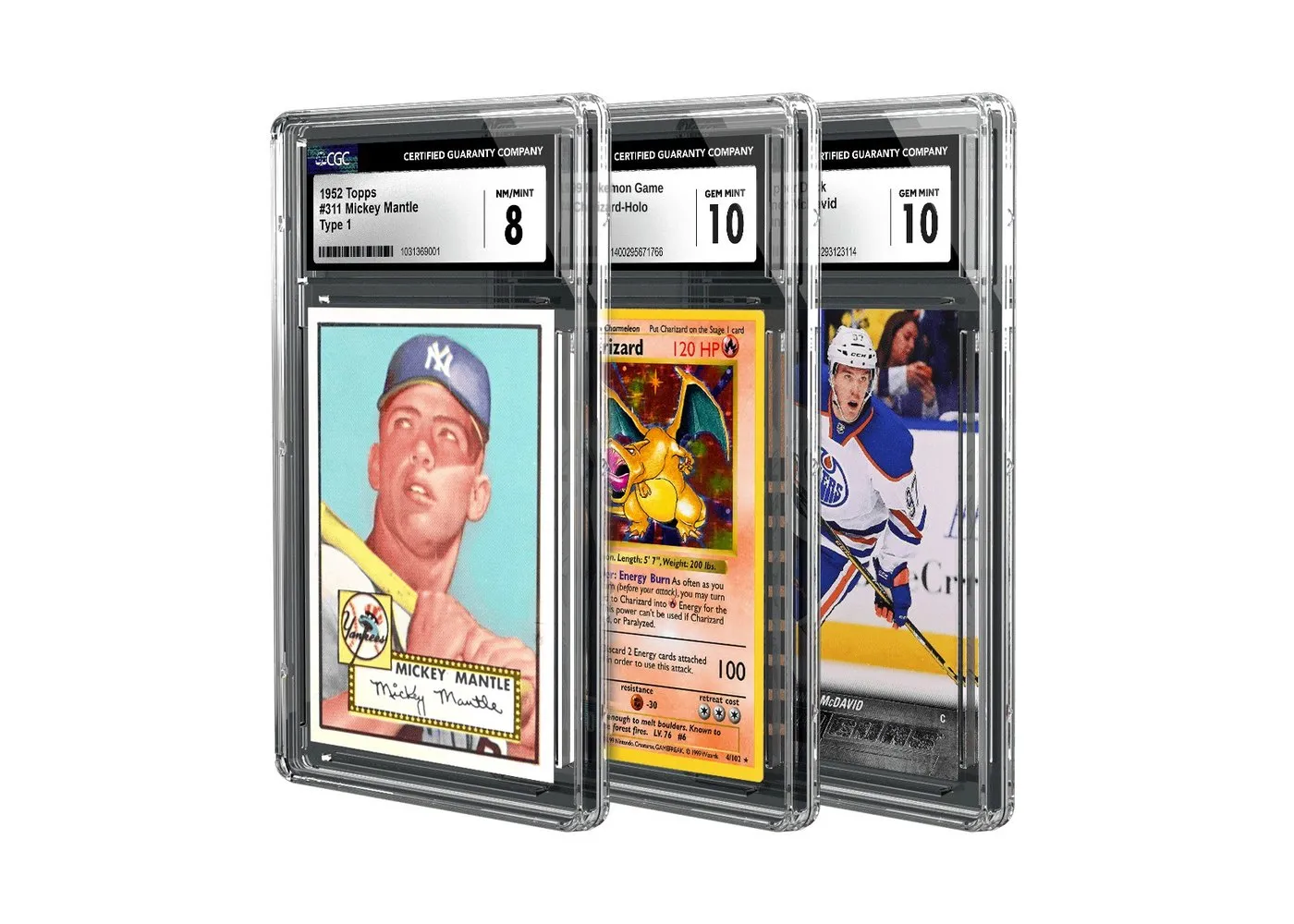
Sports & Pokémon Cards
Sports cards, Pokémon cards, paper currency, medals, and other collectibles. We will take a look and give you a fair offer.
Learn More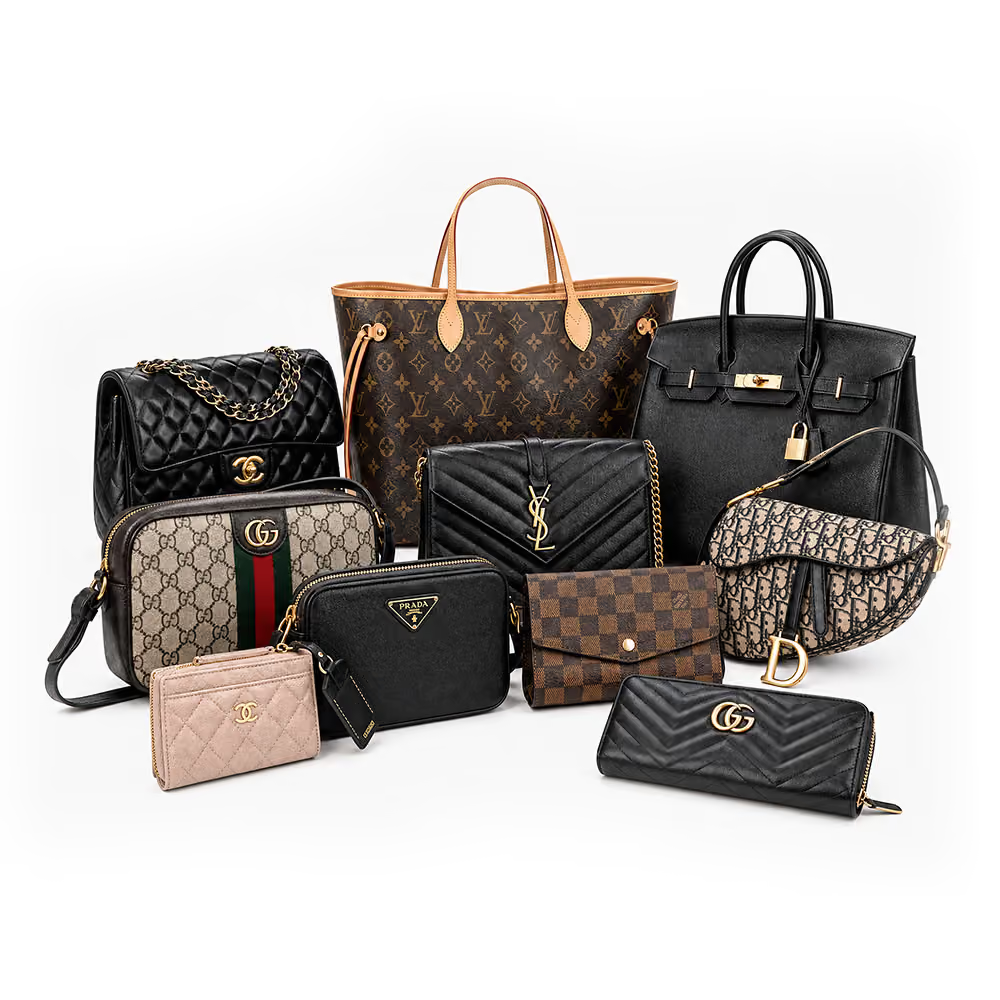
Designer Bags
Designer handbags from recognized luxury brands, evaluated for authenticity, condition, and demand.
Learn More#1 Diamonds Buyers in Central Florida
Trusted Buyers of Natural Diamonds 1 Carat & Larger: Loose Diamonds, Engagement Rings & Fine Diamond Jewelry
Your diamond deserves more than a quick guess at its value.
Have a diamond engagement ring you no longer wear? A loose natural diamond that's been stored away? Perhaps you've inherited a diamond ring, own a GIA-graded diamond, or are considering selling a larger stone.
At GoldMax Jewelry Buyers, we help customers discover the current resale value of their natural diamonds through professional, transparent, in-person evaluations.
We specialize in purchasing natural diamonds weighing 1.00 carat or more, whether they're loose or mounted in eligible jewelry.
From classic round brilliant diamonds to oval, emerald, cushion, princess, and other popular shapes, our experienced buyers examine the characteristics that influence each stone's value.
Unlike gold jewelry, which is often valued primarily for its precious-metal content, diamonds require a more specialized evaluation. Carat weight, cut, color, clarity, certification, condition, and current market demand all play important roles.
At GoldMax, we explain these factors, examine your diamond, and provide a competitive purchase offer based on the actual stone and its resale potential.
With convenient stores throughout Tampa Bay and Central Florida, you can meet with a local buyer without shipping your valuable diamond to an unfamiliar company.
We Buy Natural Diamonds of 1 Carat or Larger
Loose & Mounted Natural Diamonds: Evaluated Individually
Not every diamond has the same resale value, even when two stones have identical carat weights.
A well-proportioned diamond with desirable color and clarity characteristics can have a different resale market from another diamond of the same weight.
That's why GoldMax evaluates qualifying natural diamonds individually.
Our focus is on natural diamonds weighing 1.00 carat or more, including loose stones and eligible diamonds mounted in engagement rings and other jewelry.
Types of Natural Diamonds We Evaluate
- Natural diamonds weighing 1.00 carat or more
- Loose natural diamonds
- Natural diamond engagement rings
- Natural diamond solitaire rings
- GIA-graded natural diamonds
- Eligible diamonds without grading reports
- Natural diamonds mounted in gold or platinum jewelry
- Round brilliant natural diamonds
- Oval and cushion-cut natural diamonds
- Emerald, radiant, and princess-cut natural diamonds
- Pear, marquise, Asscher, and other qualifying shapes
- Selected natural diamonds in estate jewelry
- Larger natural diamonds and qualifying collections
If you own an unusual diamond, a stone with a distinctive color, or a piece of designer diamond jewelry, contact your nearest GoldMax store to discuss its eligibility.
Why Does GoldMax Focus on Diamonds of 1 Carat or More?
The market for diamonds varies significantly by size, quality, and demand.
Larger natural diamonds can have different resale opportunities from small accent stones, particularly when they can be evaluated and marketed individually.
GoldMax currently focuses its individual diamond-buying service on qualifying natural diamonds weighing at least 1.00 carat.
This allows our buyers to concentrate on stones that meet the company's purchasing criteria.
What If My Diamond Is Smaller Than 1 Carat?
A diamond below one carat may not qualify for an individual diamond purchase, but the jewelry holding it could still contain valuable gold or platinum.
If you have a smaller diamond engagement ring, necklace, or other piece of jewelry, GoldMax can evaluate qualifying precious-metal components.
Small accent diamonds may also be considered as part of a jewelry evaluation, depending on the item.
A smaller diamond is not necessarily worthless simply because it does not meet our individual diamond-buying criteria.
Have a natural diamond weighing 1 carat or more? Discover its current resale potential at GoldMax.
Sell Loose Natural Diamonds: Certified & Uncertified Stones
Looking for a Buyer for Your Loose Diamond?
A loose diamond is a stone that is not currently mounted in a ring, pendant, or other piece of jewelry.
Some customers own loose diamonds after replacing the center stone in an engagement ring. Others inherit individual stones or retain diamonds removed from older jewelry.
GoldMax evaluates qualifying loose natural diamonds weighing 1.00 carat or more.
Our buyers consider the stone's identity, measurements, weight, quality characteristics, condition, and current resale demand.
Can I Sell a Loose Diamond With a GIA Report?
Yes. GoldMax evaluates eligible natural diamonds accompanied by GIA grading reports.
A GIA report provides documented information about a stone's characteristics and can assist buyers in understanding its quality.
If your diamond has a GIA report, bring the report number or original document with the stone.
Can I Sell a Loose Diamond Without a Certificate?
A qualifying natural diamond may still be evaluated without its original grading documentation.
However, additional examination or verification may be necessary to establish characteristics that affect its value.
GoldMax can review the stone and determine whether sufficient information is available to make an offer.
You do not automatically need to purchase a new laboratory grading report before contacting us.
What If My Diamond Has an Older Report?
Older diamond reports can still contain useful information.
However, the stone's current condition, identity, and the details of the report should be reviewed.
An older grading report is not a guarantee of present resale value.
If you have original paperwork, bring it with the diamond.
Have a loose natural diamond? Request a free evaluation at GoldMax.
Sell Diamond Engagement Rings: Natural Diamond Ring Buyers
Your Diamond Engagement Ring May Have Significant Resale Value
Diamond engagement rings are among the most recognizable forms of fine jewelry.
An engagement ring may feature a substantial natural diamond set in gold or platinum, smaller accent diamonds, or a distinctive designer setting.
If you're ready to sell an engagement ring you no longer wear, GoldMax can help you understand which parts of the jewelry contribute to its resale value.
We evaluate qualifying natural diamond engagement rings, with particular interest in individual natural center stones weighing 1.00 carat or more.
Types of Diamond Engagement Rings We Evaluate
- Natural diamond solitaire engagement rings
- Round brilliant diamond rings
- Oval diamond engagement rings
- Emerald-cut diamond rings
- Cushion-cut diamond engagement rings
- Princess-cut diamond rings
- Radiant-cut diamond rings
- Pear-shaped diamond rings
- Three-stone diamond engagement rings
- Diamond halo engagement rings
- Vintage and estate engagement rings
- Selected authentic designer diamond rings
- Gold and platinum diamond settings
Does the Ring Setting Have Value?
Yes, eligible gold and platinum settings can have value in addition to the diamond.
For example, a ring may contain an individually valuable natural center diamond and a setting made from 14K or 18K gold.
Our buyers examine the diamond and the precious-metal components when determining what GoldMax may offer for the complete piece.
Selected designer or estate settings may also have additional resale characteristics.
Do I Need to Remove My Diamond From Its Ring?
No. Do not remove the diamond simply to prepare it for your initial GoldMax evaluation.
Our buyers can begin by examining a mounted stone.
However, the setting may limit the ability to verify exact weight, color, clarity, or certain characteristics.
If additional examination is necessary, our team will explain the available options before further action is taken.
What If My Engagement Ring Contains Several Smaller Diamonds?
If the center stone is below GoldMax's one-carat individual diamond threshold, the ring may still contain eligible precious metals.
The smaller diamonds can be reviewed as part of the overall jewelry evaluation, but they do not automatically qualify for separate diamond purchase offers.
Thinking about selling a diamond engagement ring? GoldMax can help you understand its resale potential.
Sell Larger Natural Diamonds: 1 Carat, 2 Carats, 3 Carats & More
We Evaluate Natural Diamonds Across a Range of Sizes
Larger natural diamonds can represent significant value, but carat weight alone does not determine a purchase offer.
At GoldMax, we evaluate qualifying natural diamonds in multiple sizes, including:
- 1.00-carat natural diamonds
- 1.25-carat natural diamonds
- 1.50-carat natural diamonds
- 2-carat natural diamonds
- 3-carat natural diamonds
- 4-carat natural diamonds
- 5-carat and larger natural diamonds
These are examples of sizes that may qualify, not guaranteed purchase categories or fixed pricing tiers.
How Much Is a 1-Carat Natural Diamond Worth?
The value of a 1-carat natural diamond can vary considerably.
Two stones that both weigh exactly 1.00 carat may have different cut quality, color, clarity, proportions, condition, and certification.
They may therefore attract very different resale offers.
Our buyers evaluate the specific stone before determining what GoldMax can pay.
Is a 2-Carat Diamond Worth Twice as Much as a 1-Carat Diamond?
Not necessarily.
Diamond pricing does not increase in a simple, fixed proportion to weight.
Certain size thresholds can affect pricing, but quality, shape, and demand remain essential.
A larger stone with weaker quality characteristics can have a different resale value from a smaller stone with more desirable characteristics.
Selling a 3-Carat or Larger Diamond
Larger diamonds may require additional attention to certification, authenticity, treatments, and current resale market conditions.
If you're considering selling a particularly large or uncommon natural diamond, we recommend contacting GoldMax before visiting.
Providing the carat weight, shape, grading report, and photographs can help our team prepare for the evaluation.
Have a larger natural diamond? Contact GoldMax and explore your selling options.
Diamond Shapes We Buy: Round, Oval, Emerald, Cushion & More
Diamond Shape Can Influence Resale Demand
Diamonds are cut into many shapes, and each shape has distinct characteristics.
Shape is not the same as the formal quality of a diamond's cut.
A diamond's outline, proportions, faceting style, and current consumer demand can influence its resale potential.
GoldMax evaluates qualifying natural diamonds in a variety of shapes.
Round Brilliant Diamonds
Round brilliant diamonds are among the most widely recognized diamond shapes.
Their faceting pattern is designed to produce brilliance, fire, and scintillation.
Round brilliant diamonds are also the standard shape for which GIA provides an overall cut grade under its conventional grading system.
We evaluate eligible round brilliant natural diamonds weighing at least one carat.
Oval-Cut Diamonds
Oval diamonds offer an elongated appearance and a brilliant-style facet arrangement.
When evaluating an oval diamond, relevant factors may include its length-to-width ratio, proportions, symmetry, face-up appearance, and any noticeable bow-tie effect.
Current market demand for a particular size and quality can also influence the offer.
Emerald-Cut Diamonds
Emerald-cut diamonds feature step-cut facets, long geometric lines, and a distinctive rectangular outline.
Their open faceting can make certain inclusions and other clarity characteristics easier to notice.
We evaluate qualifying natural emerald-cut diamonds based on their overall quality, proportions, appearance, and resale demand.
Cushion-Cut Diamonds
Cushion-cut diamonds generally have softened corners and a square or rectangular outline.
They are produced in several faceting styles, including modern brilliant and antique-inspired variations.
Their proportions, appearance, clarity, and current demand help determine their resale potential.
Princess-Cut Diamonds
Princess-cut diamonds are commonly associated with a square outline and brilliant-style faceting.
Because their corners can be vulnerable to damage, condition is an important factor during evaluation.
We consider the specific stone's proportions, symmetry, quality, and resale market.
Pear-Shaped Diamonds
Pear-shaped diamonds combine a rounded end with a tapered point.
The stone's overall proportions, symmetry, face-up appearance, and condition can influence its desirability.
Damage around the pointed end may affect resale potential.
Radiant-Cut Diamonds
Radiant-cut diamonds typically combine a rectangular or square outline with trimmed corners and brilliant-style faceting.
They are available in different proportions and configurations.
Our buyers consider the stone's appearance, quality characteristics, and relevant resale demand.
Marquise-Cut Diamonds
Marquise diamonds have an elongated outline with pointed ends.
Proportions, symmetry, overall appearance, and condition can all affect marketability.
A stone's length-to-width ratio may also influence buyer preferences.
Asscher-Cut Diamonds
Asscher-cut diamonds typically feature a square outline, cropped corners, and step-cut faceting.
Their geometric appearance can make clarity and proportion considerations particularly relevant.
GoldMax evaluates qualifying natural Asscher-cut stones.
Heart-Shaped Diamonds
Heart-shaped diamonds require careful attention to symmetry, proportions, and the appearance of their defining shape.
Market demand can vary significantly by size and quality.
We evaluate eligible natural heart-shaped diamonds when they meet our buying criteria.
Trillion, Baguette & Other Shapes
Some jewelry contains triangular, baguette, or other specialty-cut diamonds.
These stones are commonly used as side stones or decorative accents, although larger examples also exist.
Qualifying individual natural diamonds of at least one carat may be evaluated for direct purchase.
Smaller accent stones are generally reviewed as part of an overall jewelry evaluation.
Whatever shape your natural diamond has, GoldMax can help determine whether it qualifies for purchase.
How Much Is My Natural Diamond Worth?
Understanding the Four Cs of Diamond Value
The most important starting point for understanding a diamond's quality is the internationally recognized 4Cs: carat weight, cut, color, and clarity.
These characteristics describe different aspects of a diamond.
When combined with certification, condition, treatments, shape, and current resale demand, they help inform a diamond's market value.
1. Carat Weight: How Much Does the Diamond Weigh?
Carat weight measures a diamond's actual weight.
One metric carat equals 0.20 grams.
For example:
- A 1.00-carat diamond weighs 0.20 grams.
- A 2.00-carat diamond weighs 0.40 grams.
- A 3.00-carat diamond weighs 0.60 grams.
- A 5.00-carat diamond weighs 1.00 gram.
Carat weight should not be confused with the physical diameter of a diamond.
Two diamonds of identical weight may appear different in size because of their shape and proportions.
Larger diamonds can command higher prices per carat, but this relationship varies with quality, size thresholds, and market conditions.
2. Cut: How Well Does the Diamond Interact With Light?
Cut quality refers to the proportions, craftsmanship, and light performance of a diamond.
A well-cut diamond may display attractive brightness, fire, and scintillation.
Factors such as proportions, symmetry, polish, and facet arrangement contribute to its appearance.
For standard round brilliant diamonds, GIA provides a formal cut grade ranging from Excellent to Poor.
Other diamond shapes are evaluated differently, and their appearance is assessed using shape-specific characteristics, symmetry, polish, and proportions.
Cut quality can affect desirability, but no single ranking of the 4Cs determines the value of every diamond.
3. Color: How Much Body Color Does the Diamond Have?
For conventional colorless-to-light-colored diamonds, GIA uses a D-to-Z color grading scale.
The scale generally ranges from colorless to stones displaying increasingly noticeable yellow or brown body color.
A diamond's color characteristics can influence its resale demand and price.
However, color should be considered alongside the stone's cut, clarity, weight, and other factors.
Natural fancy-colored diamonds use a different color evaluation system.
4. Clarity: What Internal and External Characteristics Are Present?
Natural diamonds can contain internal characteristics known as inclusions and external characteristics known as blemishes.
Clarity grading considers factors such as the size, number, position, and visibility of these characteristics.
The commonly recognized GIA clarity scale includes:
- Flawless (FL)
- Internally Flawless (IF)
- Very, Very Slightly Included (VVS1 and VVS2)
- Very Slightly Included (VS1 and VS2)
- Slightly Included (SI1 and SI2)
- Included (I1, I2, and I3)
These grades can influence the diamond's marketability and resale value.
However, two stones with the same clarity grade may have different inclusion patterns, appearances, or other characteristics.
Why the Four Cs Must Be Considered Together
No single characteristic tells the complete story.
A large diamond with a lower clarity grade does not necessarily command a higher purchase offer than a smaller diamond with stronger overall quality.
Similarly, two diamonds with the same carat weight and color can have different resale values because of cut, clarity, shape, or condition.
GoldMax considers the relevant combination of characteristics when evaluating eligible natural diamonds.
The best way to understand what your diamond is worth is to have the actual stone evaluated.
GIA-Certified Diamond Buyers: What Does a Grading Report Mean?
Have a GIA Report? Bring It With Your Diamond
A diamond grading report provides documented information about a diamond's identifying characteristics and quality.
GIA, the Gemological Institute of America, is a widely recognized independent organization for diamond grading and gemological research.
GoldMax evaluates eligible natural diamonds accompanied by GIA reports and other relevant documentation.
What Information Is Included in a Diamond Grading Report?
Depending on the type of report, information can include:
- Diamond shape and cutting style
- Measurements
- Carat weight
- Color grade
- Clarity grade
- Cut grade, where applicable
- Polish and symmetry
- Fluorescence
- Clarity characteristics
- Identification or report number
- Additional comments regarding treatments or characteristics
This information can help establish a diamond's identity and provide a consistent foundation for evaluating its quality.
Does a GIA Report Tell Me How Much My Diamond Is Worth?
No. A standard GIA diamond grading report describes gemological characteristics.
It is not a cash purchase offer and does not provide a fixed resale price.
The price a buyer may offer depends on current market conditions, the particular stone, and other relevant considerations.
Can GoldMax Buy a Diamond Without a GIA Report?
A qualifying natural diamond may still be evaluated even if it has no GIA report.
Our buyers can examine the stone and review available information.
Some items may require additional testing, grading information, or specialist review before a firm purchase offer can be made.
What If I Have a Report From Another Laboratory?
GoldMax can review eligible diamonds accompanied by reports from other recognized grading organizations.
Different laboratories may use different grading procedures or standards.
Our buyers consider the information provided while evaluating the actual diamond.
How Do I Know Whether My GIA Report Matches My Diamond?
A grading report typically includes identifying characteristics and measurements.
Some diamonds also have a microscopic laser inscription corresponding to their report number.
Where available, these details can help with identification.
A report number can also be checked through GIA's official report verification service.
The existence of paperwork does not replace examination of the actual stone.
Have a GIA-graded natural diamond? Bring the stone and report to GoldMax for an evaluation.
Natural Diamonds vs. Lab-Grown Diamonds: What GoldMax Buys
Understanding the Difference Before You Sell
Natural and laboratory-grown diamonds can look extremely similar.
Both are diamonds with essentially the same chemical composition and many of the same optical and physical properties.
The key difference is their origin.
Natural diamonds form through geological processes within the Earth.
Laboratory-grown diamonds are manufactured using controlled processes that reproduce conditions suitable for diamond growth.
Both are distinct from diamond simulants such as cubic zirconia and moissanite.
Does GoldMax Buy Lab-Grown Diamonds?
GoldMax's primary diamond-buying service focuses on qualifying natural diamonds weighing 1.00 carat or more.
Laboratory-grown diamonds are not part of the company's advertised individual natural-diamond buying program.
If you own lab-grown diamond jewelry, the gold or platinum setting may still qualify for a precious-metal evaluation.
Contact GoldMax before visiting if you're unsure whether an item meets our purchasing criteria.
Can You Tell the Difference Just by Looking?
Natural and laboratory-grown diamonds cannot always be reliably distinguished through ordinary visual inspection or basic diamond testing equipment.
Proper identification may require specialized screening instruments or laboratory examination.
Our buyers will review the available characteristics and documentation and explain if further verification is needed.
Why Does Natural or Laboratory-Grown Origin Matter?
Origin can significantly affect the resale market.
Natural and laboratory-grown diamonds have different production, supply, and secondary-market characteristics.
That is why accurate identification is an important part of evaluating a stone.
If you're unsure whether your diamond is natural, contact GoldMax to discuss the appropriate evaluation process.
Other Factors That Can Affect Your Diamond's Resale Value
A Diamond's Value Goes Beyond the Four Cs
While the 4Cs provide the foundation for describing diamond quality, other factors can also affect a stone's resale potential.
Fluorescence
Some diamonds emit visible light when exposed to ultraviolet radiation.
This characteristic is called fluorescence and is commonly described on grading reports.
Fluorescence can affect how certain stones are viewed in the market, but its impact is not identical for every diamond.
The presence of fluorescence does not automatically mean a diamond is damaged or low-quality.
Diamond Proportions
Measurements such as table size, depth, crown and pavilion characteristics, and length-to-width ratio can influence appearance.
The relevant proportions vary according to shape and cutting style.
Polish and Symmetry
Polish describes the quality of a diamond's finished facet surfaces.
Symmetry describes the consistency and alignment of the stone's shape and facets.
Both can influence a diamond's appearance and marketability.
Chips, Abrasions and Damage
Diamonds are extremely hard, but they can still suffer damage.
Chips around edges, points, or other vulnerable areas may affect a stone's resale value.
Our buyers examine the diamond's current condition during the evaluation.
Treatments and Enhancements
Some diamonds undergo treatments intended to alter their color or improve the appearance of certain clarity characteristics.
Treatments can affect resale value and may require additional examination.
Our buyers consider relevant treatment disclosures and identifying information when determining whether a stone qualifies for purchase.
Shape and Current Demand
Different diamond shapes have different customer markets.
Demand can vary over time and may influence what buyers are willing to pay for a particular stone.
Certification and Documentation
Recognized grading reports can provide valuable information about diamond quality and identity.
However, documentation must correspond to the actual stone, and market value is not established by certification alone.
Why Is My Diamond's Resale Value Different From Its Retail Price?
Understanding Retail Prices, Appraisals and Cash Purchase Offers
One of the most common questions from customers selling diamonds is:
"Why is my diamond worth less than what I originally paid?"
A diamond's original retail purchase price is not the same as its current resale value.
Retail prices can include store expenses, inventory costs, brand positioning, customer services, and other factors associated with selling finished jewelry.
A professional buyer's purchase offer reflects the secondary market for the specific stone or jewelry piece.
Retail Purchase Price
The original retail price represents what a customer paid when purchasing the diamond or jewelry from a retailer.
It does not guarantee the amount the item can later be resold for.
Insurance Appraisal Value
Insurance appraisals often estimate replacement cost under particular assumptions.
This figure may differ significantly from what a buyer is prepared to pay for the item in a resale transaction.
Current Resale Market Value
Resale value reflects what comparable diamonds or jewelry may command in the current secondary market.
Factors such as quality, certification, shape, condition, and demand are relevant.
Professional Buyer Purchase Offer
A buyer's offer may also account for authentication, resale expenses, market risks, and business costs.
For these reasons, a purchase offer is not automatically equal to a retailer's asking price or an insurance appraisal.
Can Two Identical-Looking Diamonds Have Different Values?
Yes.
Diamonds may appear similar to the unaided eye but have different clarity grades, color characteristics, proportions, treatments, or certification details.
Even relatively subtle differences can affect resale demand.
At GoldMax, we evaluate the actual characteristics of the qualifying stone and explain how those factors contribute to the offer.
Want to understand your diamond's present resale potential? Request a free GoldMax evaluation.
Sell Inherited Diamonds & Estate Diamond Jewelry
Not Sure What You've Inherited? We Can Help You Understand It
Inherited diamond jewelry can be difficult to evaluate without professional assistance.
You may have received a diamond ring, a loose stone, a piece of vintage jewelry, or a collection of items with little or no supporting documentation.
At GoldMax, we evaluate eligible natural diamonds and qualifying precious-metal jewelry.
Estate Diamond Items We Evaluate
- Natural diamond engagement rings
- Loose natural diamonds
- Vintage diamond rings
- Diamond jewelry set in gold or platinum
- Selected antique diamond jewelry
- Inherited one-carat and larger natural diamonds
- Eligible natural diamond collections
- Selected designer diamond jewelry
Are Antique Diamonds Worth More?
Some antique and vintage diamond pieces have additional resale characteristics because of their design, craftsmanship, rarity, or historical appeal.
However, age alone doesn't guarantee a premium.
Older diamonds may have different cutting styles and grading characteristics from modern stones.
Our buyers consider the specific item and its current resale potential.
Can GoldMax Evaluate an Entire Jewelry Collection?
Yes. GoldMax can evaluate qualifying natural diamonds alongside eligible gold, platinum, and other valuables.
If you have a particularly large or unusual collection, contact the store in advance to discuss the evaluation.
You do not need to know the original purchase price or exact age of every item before getting started.
Have inherited diamond jewelry? GoldMax can help identify what may qualify for purchase.
Designer Diamond Jewelry Buyers
Some Fine Jewelry May Have Value Beyond Its Diamonds and Gold
Certain authentic designer diamond jewelry pieces can have additional resale demand because of their manufacturer, design, craftsmanship, and brand recognition.
GoldMax evaluates selected fine and designer jewelry when it meets the company's current purchasing criteria.
Recognized luxury jewelry names include Tiffany & Co., Cartier, Harry Winston, Van Cleef & Arpels, and other established designers.
These are examples of brands found in the fine-jewelry resale market, not a guarantee that GoldMax purchases every piece from those manufacturers.
How Is Designer Diamond Jewelry Evaluated?
Relevant factors may include:
- Authenticity
- Manufacturer and collection
- Natural diamond characteristics
- Precious-metal content
- Original design and craftsmanship
- Condition and alterations
- Available documentation
- Current resale demand
What If I Don't Have the Original Box?
Original packaging and documentation can be useful, but their absence does not automatically eliminate the resale potential of qualifying jewelry.
Bring any receipts, certificates, boxes, or other records you still have.
Our buyers can examine the actual item and determine whether it meets GoldMax's purchasing criteria.
Have valuable designer diamond jewelry? Contact GoldMax to discuss an evaluation.
How to Sell Your Natural Diamond at GoldMax
Four Simple Steps to Selling Your Diamond
Selling a diamond shouldn't involve confusing estimates, unexplained offers, or pressure to make an immediate decision.
At GoldMax, our goal is to provide a professional evaluation and a clear purchase offer for qualifying items.
Step 1: Bring Your Diamond or Request a Quote
Visit your nearest GoldMax location or begin with an online quote request.
If available, bring:
- The diamond or diamond jewelry
- GIA or other grading reports
- Original purchase records
- Previous appraisals
- Relevant jewelry documentation
- Original designer packaging, if applicable
No appointment is required for standard walk-in evaluations.
For large or specialized diamonds, contacting the store beforehand is recommended.
Step 2: We Examine Your Diamond
Our buyers review the stone and its available documentation.
Depending on the item, this may include examining its measurements, shape, approximate or documented carat weight, visible quality characteristics, condition, and identifying information.
Additional screening or verification may be needed to confirm natural origin, treatments, or other characteristics.
Mounted diamonds can often receive an initial evaluation without being removed from the setting.
Step 3: We Explain Your Purchase Offer
After evaluating the available information, our team reviews the factors relevant to the stone's resale potential.
These may include carat weight, cut, color, clarity, documentation, condition, and current diamond market demand.
The setting and other eligible jewelry components may also be considered.
Our buyer explains the offer and answers your questions.
For certain items, additional specialist review may be necessary before a final offer is available.
Step 4: You Decide Whether to Sell
There's no obligation to accept an offer.
If you decide to sell and the transaction is completed, GoldMax provides same-day payment.
If you prefer to keep your diamond, you're free to decline.
Your diamond. Your decision. An informed evaluation.
Why Sell Your Natural Diamond to GoldMax Jewelry Buyers?
Experience Buying Jewelry & Valuable Items
GoldMax has more than 15 years of experience serving customers in Florida.
Our buying services cover precious-metal jewelry, natural diamonds, luxury watches, coins, and other qualifying valuables.
Free, No-Obligation Evaluations
You shouldn't have to commit to selling your natural diamond simply to learn whether GoldMax can make an offer.
Our standard evaluations are free, and you can decide whether to proceed.
In-Person Evaluations
You can visit a local GoldMax store and discuss your diamond directly with a buyer.
This provides a convenient alternative to mailing a valuable stone to an unfamiliar purchasing company.
Clear Explanations of Diamond Quality
We aim to explain the relevant factors influencing your offer, including diamond quality, weight, documentation, condition, and resale demand.
We Evaluate Loose & Mounted Diamonds
Qualifying natural diamonds can be presented loose or mounted in jewelry.
You don't need to remove your diamond from its setting before requesting an initial evaluation.
We Also Buy Eligible Gold & Platinum Jewelry
If your diamond is set in a qualifying precious-metal ring, the setting may contribute value to the overall purchase offer.
Even if a diamond does not meet our individual purchasing criteria, eligible gold or platinum components may still qualify for evaluation.
We Buy: We Don't Offer Pawn Loans
GoldMax focuses on purchasing qualifying valuables directly from customers.
We don't offer pawn loans involving repayment obligations or borrowing interest.
You receive an offer for an outright sale and decide whether you want to complete the transaction.
Convenient Central Florida Locations
GoldMax serves customers in Tampa, Carrollwood, New Port Richey, Sarasota, Lakeland, and surrounding communities.
Choose a store near you and discuss your diamond with a local buyer.
Same-Day Payment for Completed Purchases
Once an offer has been finalized, accepted, and the transaction completed, payment is provided the same day.
Frequently Asked Questions About Selling Natural Diamonds
Where can I sell a natural diamond near me?
GoldMax Jewelry Buyers evaluates qualifying natural diamonds weighing 1.00 carat or more at convenient locations throughout Tampa Bay and Central Florida.
Does GoldMax buy natural diamonds?
Yes. GoldMax specializes in purchasing eligible natural diamonds weighing 1.00 carat or larger, including qualifying loose and mounted stones.
What is the minimum diamond size GoldMax buys?
GoldMax's advertised individual diamond-buying threshold is 1.00 carat for natural diamonds.
Does GoldMax buy diamonds under 1 carat?
Smaller diamonds generally do not qualify for individual diamond purchase offers. However, eligible gold or platinum jewelry settings and certain accent stones may be evaluated as part of an overall jewelry transaction.
Does GoldMax buy 1-carat diamonds?
Yes. We evaluate eligible natural diamonds weighing at least 1.00 carat, subject to authenticity, quality, condition, and current purchasing criteria.
Does GoldMax buy 2-carat and 3-carat diamonds?
Yes. GoldMax evaluates qualifying larger natural diamonds, including two-carat, three-carat, and other sizes.
How much is a 1-carat natural diamond worth?
The value depends on the particular diamond's cut, color, clarity, shape, certification, condition, and current resale demand. Carat weight alone is not sufficient to determine a purchase offer.
Does GoldMax buy loose diamonds?
Yes. GoldMax evaluates eligible loose natural diamonds weighing 1.00 carat or more.
Can I sell a diamond engagement ring?
Yes. We evaluate qualifying natural diamond engagement rings. The diamond and eligible precious-metal setting may both contribute to the overall offer.
Does GoldMax purchase GIA-certified diamonds?
Yes. We evaluate qualifying natural diamonds accompanied by GIA grading reports.
Can I sell a diamond without a certificate?
A qualifying natural diamond may still be evaluated without a grading report. Additional verification or specialist review may be necessary.
Does a GIA report guarantee a particular purchase price?
No. A grading report documents diamond characteristics. It does not establish a guaranteed cash resale value.
Do I need to remove my diamond from its ring?
No. You can bring your diamond mounted in its setting for an initial evaluation. Certain characteristics may require additional examination for a more precise assessment.
Does GoldMax buy oval and emerald-cut diamonds?
Yes. We evaluate eligible natural diamonds in these and other qualifying shapes.
Does GoldMax buy princess, cushion, radiant, and pear-shaped diamonds?
Yes. GoldMax evaluates qualifying natural diamonds in all of these shapes.
Does GoldMax buy fancy-colored natural diamonds?
Certain natural fancy-colored diamonds may require specialized evaluation. Contact your nearest store to discuss the stone and its documentation before visiting.
Does GoldMax buy lab-grown diamonds?
GoldMax's advertised individual diamond-buying service focuses on natural diamonds. Laboratory-grown diamond jewelry may still contain eligible gold or platinum settings.
Can GoldMax tell whether my diamond is natural?
GoldMax can review your diamond and available documentation. Reliable natural-versus-laboratory-grown identification can require specialized screening or laboratory examination.
What are the four Cs of diamonds?
The 4Cs are carat weight, cut, color, and clarity. They are standard characteristics used to describe diamond weight and quality.
Is a larger diamond always worth more?
No. Size is important, but a larger stone with less desirable quality characteristics may have a different resale value from a smaller, higher-quality diamond.
Does diamond fluorescence reduce value?
Not automatically. Fluorescence affects different diamonds differently, and its influence on market value depends on the stone's characteristics and current buyer demand.
Does GoldMax buy chipped or damaged diamonds?
Qualifying natural diamonds with damage may still be considered. However, chips, fractures, and other condition issues can affect purchasing interest and resale value.
Does GoldMax buy antique diamond rings?
We evaluate selected antique and estate diamond rings, including eligible natural diamonds and precious-metal settings.
Does GoldMax buy diamond tennis bracelets?
GoldMax can evaluate eligible precious-metal bracelets and any qualifying natural diamonds. Small stones in a bracelet are not automatically eligible for separate individual diamond purchase offers.
Can I sell diamond earrings?
Qualifying natural diamonds in earrings may be evaluated when an individual stone meets GoldMax's size and purchasing criteria. Eligible precious-metal components may also have value.
Does GoldMax buy platinum diamond rings?
Yes. Eligible platinum jewelry may be evaluated together with qualifying natural diamonds.
Why is my diamond appraisal higher than the resale offer?
An appraisal may estimate replacement cost for insurance purposes, while a purchase offer reflects current resale-market considerations and buyer costs.
Should I have my diamond professionally graded before selling it?
Not necessarily. A recognized grading report may be useful, but it is not always required to request an initial GoldMax evaluation. Ask whether additional documentation would be useful for your particular stone.
Do I need an appointment to sell a diamond?
Standard walk-in evaluations do not require appointments. For larger, specialized, or unusual diamonds, calling ahead is recommended.
Is a diamond evaluation free?
Yes. GoldMax provides free, no-obligation evaluations for qualifying items.
Does GoldMax pay the same day?
Yes. Once a purchase offer is accepted and the transaction is completed, payment is provided the same day.
Does GoldMax's 20% jewelry promotion apply to diamonds?
No. The 20% bonus is restricted to eligible gold and silver jewelry under the promotion's terms. It does not apply to natural diamond value.
Does GoldMax's Price Match Guarantee apply to diamonds?
No. Diamonds are excluded from GoldMax's published Price Match Guarantee. The policy covers only qualifying gold and silver offers subject to its specific terms.
*Brand names and trademarks mentioned on this page belong to their respective owners. GoldMax is an independent buyer and is not affiliated with, sponsored by, or endorsed by any of these brands.